
If you have been around mountain biking for a long time, you likely have a specific memory that stands out. For me, it was the first time I saw a high-end mountain bike in a shop window back in the late 90s. It was a rigid steel frame painted in a wild, neon color scheme, and it sat proudly on 26-inch wheels. For over three decades, the “twenty6er” was not just a type of bike. It was the only standard that mattered. If you were riding off-road, you were on 26-inch wheels. It was the platform that legends like John Tomac and Tinker Juarez used to build the sport from a fringe hobby into a global phenomenon. But if you walk into a modern bike shop today, you might think these bikes have gone extinct. The industry has pushed everyone toward larger wheels, telling us that the old standard is dead and obsolete.
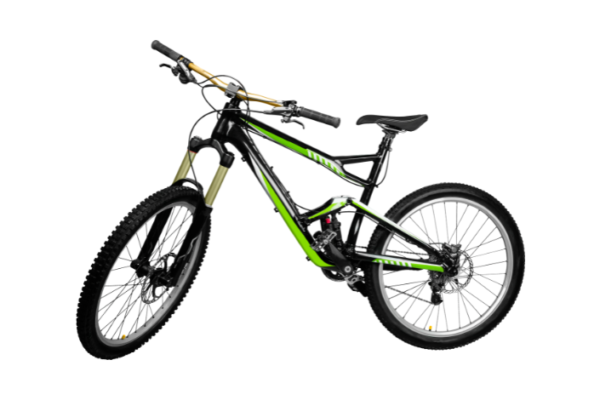
But I am here to tell you that the twenty6er is far from dead. A twenty6er is simply a mountain bike that uses the traditional 26-inch ISO 559 wheel size. While the marketing departments of big bike brands want you to buy the newest and biggest thing, there is a growing community of riders who refuse to let the little wheel die. We keep these bikes alive not just out of nostalgia, but because they offer a riding experience that modern bikes simply cannot replicate. They are snappy, they are agile, and they put a massive smile on your face. In a world obsessed with speed and data, the 26er is a reminder that riding bikes is supposed to be about fun.
The Golden Era of the 26er
To really understand why the 26-inch wheel is so important, we have to look back at the history of our sport. Mountain biking started in the hills of Marin County, California, where pioneers took old newspaper delivery bikes and modified them to survive rapid descents down gravel fire roads. These old “Klunker” bikes used 26-inch balloon tires because that was what was available at the time. As the sport evolved and companies started building dedicated mountain bikes, they stuck with that wheel size. It became the blueprint for everything. Frame geometry, fork lengths, and gearing were all designed around the 26-inch wheel.
For thirty years, nobody really questioned it because it worked perfectly. The 26er was the gold standard. It was versatile enough to handle tight technical trails on the East Coast and fast, wide-open deserts in the West. During this golden era, bike technology advanced rapidly. We went from heavy steel frames to aluminum and then to carbon fiber. We went from rigid forks to full suspension. But through all those changes, the wheel size remained constant. This created a massive ecosystem of parts and knowledge. If you broke a spoke or needed a new tire in a remote town, you could be sure the local shop had a 26-inch replacement. This universality is something we have lost a bit in modern times with so many different standards, and it is a big reason why older riders still look back at this era with so much fondness.
The Great Wheel Size Debate: 26 vs. 29 vs. 27.5
The reign of the 26er began to crumble in the early 2000s with the arrival of the 29er. I remember the first time I saw one on the trail. It looked huge, almost like a circus bike. At first, many riders laughed at them. They claimed the wheels were too big, heavy, and weak. But the physics behind the larger wheels were undeniable. A 29-inch wheel has a shallower “angle of attack” when it hits an obstacle. This means that when the wheel hits a rock or a root, it rolls over it much more easily than a smaller wheel does. It maintains its momentum better and provides a smoother ride. For racing, this was a game-changer. Racers realized they could go faster with less effort, and the industry took notice.
Eventually, bike manufacturers decided that the 26-inch wheel was no longer competitive for general trail riding. They tried to find a middle ground with the 27.5-inch wheel, also known as 650b. This was marketed as the “best of both worlds,” offering some of the rollover benefits of the big wheels with the agility of the small ones. By around 2014, the major bike brands essentially stopped making high-end 26-inch mountain bikes. They killed the production lines and told consumers that if they wanted a good bike, they had to upgrade to bigger wheels. It was a forced evolution. Many of us felt like we were being told our perfectly good bikes were suddenly garbage, even though they rode just as well as they did the day before. This shift was driven largely by sales and the pursuit of speed, but it ignored the unique character that the smaller wheel provided.
Why You Should Still Ride a Twenty6er Today
Despite the industry shift, there are compelling reasons to keep riding or even buy a twenty6er today. The first and most obvious reason is agility. Modern 29ers are incredibly stable and fast, but they can feel like driving a bus through a hallway when the trail gets tight. A 26-inch bike is naturally “flickable.” Because the wheels are smaller and the wheelbase is usually shorter, you can change direction with just a subtle shift of your hips. If you ride trails that are full of tight switchbacks and sharp corners, a 26er often feels faster and more exciting because you can dart in and out of turns. It engages you as a rider. You have to pick your lines carefully rather than just plowing over everything like a monster truck.
Another major advantage is the weight and acceleration. A smaller wheel requires less material for the rim and the tire, making it lighter. More importantly, the weight is closer to the center of the hub. In physics terms, this reduces the “rotational mass.” When you stomp on the pedals of a twenty6er, it accelerates instantly. It feels like a scared rabbit taking off. Modern big-wheeled bikes can feel a bit sluggish to get moving from a dead stop, but the 26er has a snap to it that is addictive. This quick acceleration is perfect for punchy climbs where you need a sudden burst of speed to get up a ledge or a root step.
We also need to talk about strength. A smaller circle is inherently structurally stronger than a larger one made of the same material. The spokes on a 26-inch wheel are shorter, which means there is less leverage to bend them. This makes 26-inch wheels incredibly stiff and durable. If you are a heavier rider or someone who is hard on equipment, a set of quality 26-inch wheels will often outlast a comparable set of 29-inch wheels. They are less likely to “taco” or bend into a figure-eight shape after a bad landing. This bombproof durability provides peace of mind when you are deep in the woods.
Fit is another area where the twenty6er still shines, particularly for shorter riders. The bike industry has struggled to make 29-inch bikes fit people who are under five feet five inches tall. The big wheels force the handlebars to be higher, and the bike can feel overwhelming and top-heavy. I have seen many kids and shorter adults struggle to control a modern 29er, only to instantly improve when they hop on a 26-inch bike. The proportions just work better. It allows the rider to get their weight over the front wheel correctly and maneuver the bike with confidence. If you are shopping for a teenager or a smaller partner, do not overlook the benefits of the smaller wheel size.
Finally, there is the “fun factor.” This is subjective, but it is real. Riding a twenty6er feels faster than it actually is. Because the smaller wheels do not smooth out the trail as much, you feel more of the terrain. You feel the speed. It is a raw, visceral experience. It reminds me of driving a classic sports car versus a modern luxury sedan. The luxury sedan might technically be faster around a track and more comfortable, but the classic sports car makes you feel alive. It rumbles, shakes, and communicates with you. That is the soul of the twenty6er. It turns a boring local trail into an exciting adventure.
The Niche Survivors: Where 26 Still Rules
While the 26-inch wheel has largely disappeared from the cross-country and trail riding scene, it is still the undisputed king in certain niches of the sport. Go to any dirt jump park or pump track, and you will see that almost everyone is on 26-inch wheels. In the world of Dirt Jumping and Slopestyle, riders launch themselves twenty feet into the air and perform complex tricks. They need wheels that are small so they can rotate and spin the bike quickly. They also need wheels that can withstand massive impacts when landing on concrete or hard-packed dirt. The 29er is simply too big and too fragile for this kind of abuse.
Pump tracks are another area where the 26er excels. A pump track is a small loop of rollers and berms that you ride without pedaling, using your body weight to generate speed. The quick acceleration and responsiveness of the 26-inch wheel make it the perfect tool for this. You can pump through the rollers more efficiently and carry speed through the tight corners. Even BMX riders often transition to 26-inch “dirt jumpers” when they want a slightly bigger bike that still feels like a trick bike.
There is also a dedicated group of expedition touring cyclists who swear by 26-inch wheels. These are people who ride their bikes across continents, often through developing countries. Their reasoning is practical. In many parts of South America, Africa, and Asia, 26-inch tires are still the standard for utility bikes. If you are riding a modern 29er in a remote village in the Andes and you slash a tire, you might be out of luck. But you can almost always find a 26-inch tire in a general store. For these adventurers, global parts availability is more important than rolling speed, and the 26er remains the smartest choice for world travel.
Buying and Restoring a Twenty6er
If you are convinced that you want to try a twenty6er, the good news is that it is a buyer’s market. Because the industry marketing machine has convinced everyone that these bikes are obsolete, the used market is flooded with incredible deals. You can log onto Craigslist, Facebook Marketplace, or Pinkbike right now and find top-tier mountain bikes from 2010 to 2012 for a fraction of their original cost. I am talking about bikes that cost six thousand dollars when they were new. These bikes often feature high-end carbon fiber frames, Shimano XTR or SRAM X0 drivetrains, and top-of-the-line suspension from Fox or RockShox.
You can often pick up these “superbikes” for a few hundred dollars. It is the cheapest way to get into the sport with professional-grade equipment. When buying a used 26er, you should look for the same things you would check on any used bike. Check the frame for cracks, especially around the welds and the bottom bracket area. Check the suspension stanchions for scratches. Make sure the bearings in the wheels and suspension pivots are smooth. Since these bikes are older, they might need a suspension service, so factor that into your budget. But even with the cost of a tune-up, the value proposition is unbeatable.
The main challenge with owning a 26er today is finding specific replacement parts. You cannot just walk into any bike shop and expect them to have a high-end 26-inch fork or a specific tubeless tire in stock. However, the internet has solved much of this. There is still a massive inventory of parts available online. Companies like Maxxis, Continental, and Schwalbe still produce high-quality 26-inch tires because they know there is a loyal customer base. You might have to hunt a little harder for things like high-end suspension forks, but the used market is a goldmine for parts. You can often buy a whole donor bike for parts cheaper than buying a single component new.
Modernizing the Old School
One of the most fun aspects of owning a twenty6er is tinkering with it. You can take an old frame and update it with modern components to make it ride better than it ever did. The first thing I recommend doing is updating the cockpit. Old mountain bikes came with very long stems and very narrow handlebars. This makes the steering feel twitchy and puts your weight too far forward. By swapping to a shorter stem (around 40mm or 50mm) and a wider handlebar (740mm or wider), you can completely transform the handling. It makes the bike feel more stable and gives you more leverage in the corners.
Another popular upgrade is converting the drivetrain to a “1x” system. Older bikes usually came with three chainrings in the front and nine in the back. This resulted in a lot of overlapping gears and a chain that would fall off constantly. You can remove the front derailleur and install a single “narrow-wide” chainring on the front cranks. Combine this with a wide-range cassette in the back, and you have a simpler, lighter, and quieter drivetrain. It makes the bike look cleaner and much easier to maintain.
If you are feeling adventurous, you can even try a “mullet” conversion. This involves keeping the 26-inch wheel in the back but installing a 27.5-inch wheel and fork on the front. This raises the front end of the bike, which slackens the head angle. A slacker head angle makes the bike feel more confident on steep descents. It gives you the rollover capability of the larger wheel in the front while keeping the short, snappy acceleration of the 26-inch wheel in the back. I have done this to an old hardtail, and it breathed new life into the frame, making it capable of handling much rougher trails than it was originally designed for.
Conclusion
So, is the twenty6er dead? Absolutely not. It has evolved from being the industry standard to being a beloved niche for enthusiasts, budget-conscious riders, and people who value fun over pure racing speed. The twenty6er had a thirty-year run for a good reason. It works. The bikes are strong, light, and incredibly agile. While a modern 29er might be technically faster on a stopwatch, it often lacks the soul and the playfulness of the smaller wheels.
There is a certain joy in riding a bike that requires you to be an active participant. You have to choose your lines, hop over roots, and use your body language to guide the bike. It connects you to the trail in a way that modern “monster truck” bikes do not. If you have an old 26-inch mountain bike gathering dust in your garage or shed, I encourage you to pull it out. Pump up the tires, lube the chain, and take it for a spin. You might be surprised at how much fun you have. You might remember exactly why you fell in love with mountain biking in the first place. And if you are looking for a bike on a budget, do not be afraid to buy a used 26er. You will get a high-quality machine that is capable of bringing you years of happiness. The wheel size debate will go on forever, but as long as we are spinning pedals and smiling, the size of the wheel really doesn’t matter.
FAQs
1. Are 26-inch mountain bikes obsolete?
Technically, the industry considers them obsolete for new high-end production, but practically, they are far from it. They are still highly capable machines that are fun to ride. They are supported by a strong community and parts are still available online.
2. Is a 26er good for a beginner?
Yes, a used 26er is arguably the best bike for a beginner on a budget. You can get a high-quality, lightweight bike with good suspension for the same price as a heavy, low-quality department store bike. This makes learning to ride much more enjoyable.
3. Can I put 27.5-inch wheels on my 26-inch bike?
Sometimes, but it is tricky. Some 26-inch frames and forks have enough clearance to fit a 27.5-inch wheel with a thin tire, but many do not. Even if it fits, it will raise your bottom bracket, making the bike feel unstable. A better option is usually to just put a larger wheel on the front (a mullet setup) which slackens the geometry.
4. Why do dirt jumpers use 26-inch wheels?
Dirt jumpers use 26-inch wheels because they are smaller, which makes them stiffer and stronger than larger wheels. This is crucial for surviving high-impact landings. They are also easier to whip around in the air for tricks.
5. Where can I find tires for my 26er?
While your small local shop might not stock them, major online retailers like Amazon, Jenson USA, and Chain Reaction Cycles carry a wide variety of 26-inch tires. Brands like Maxxis (Minion, High Roller) and Continental (Trail King) still produce their popular tread patterns in 26-inch sizes.



Leave a Reply